Wholesale Automatic Asphalt Marshall Compaction Machine for Bituminous Specimens Manufacturer, Quotes

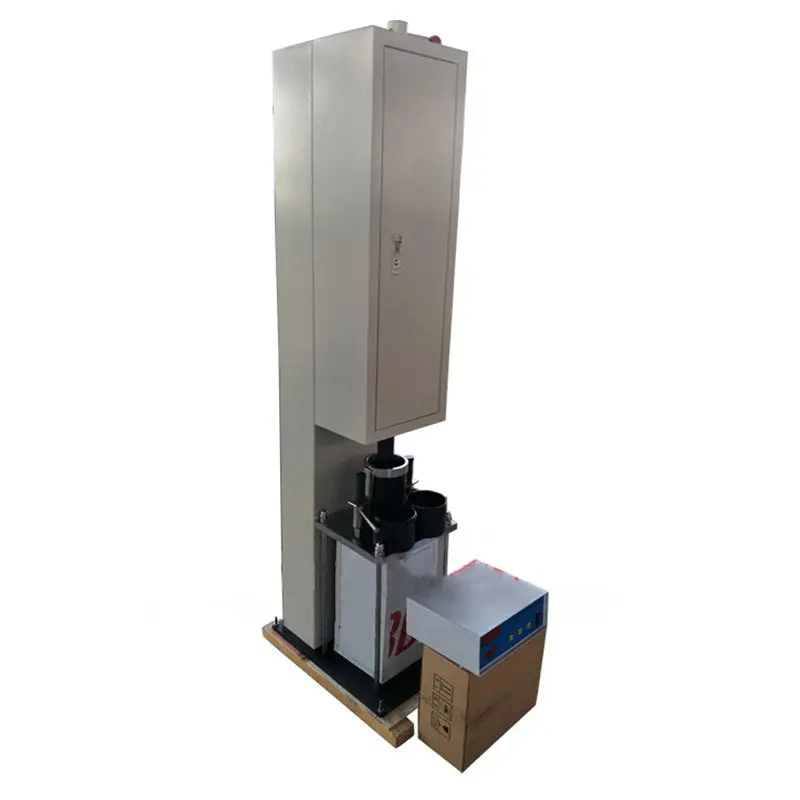
This Marshall Compaction Equipment is manufactured in accordance with the various provisions of the Ministry of Transportation industry standards "Highway Asphalt and Asphalt Mixture Test Procedures" and "Water Conservancy, Electric Power, Railway, Airport Roads". It is a special equipment for sample molding in asphalt mixture tests.Marshall Compaction Machine  is suitable for standard compaction method and is used by laboratories to conduct physical and mechanical property tests of asphalt mixtures, such as Marshall test, indirect tensile test, etc.

Product Description

Applicable Standards

Asphalt mixture specimens are produced using the standard compaction method or the large-scale compaction method for laboratory testing of physical and mechanical properties.
The standard compaction method is suitable for producing cylindrical specimens measuring 101.6 mm x 87 mm, used in Marshall tests and indirect tensile tests (splitting methods).
The large-scale compaction method is suitable for producing large cylindrical specimens measuring 152.4 mm x 115 mm.

Technical Parameters

Hammer weight: 4536 ± 9g
Hammer bottom diameter: 98.5mm ± 0.5mm
Hammer drop distance: 457.2 ± 1.5mm
Compacting speed: 60 times/min
Compacting times: Preset range 0-99 times (with memory)
Mold A: ID 152.4mm, H 115mm
Mold B: ID 101.6mm, H 87mm
Power supply: 220V ± 10% 50HZ
Power consumption: 370W

Instruments and Materials

Electric Marshall Compactor: Features a Φ98.5mm head and a motor-driven chain system for automatic record keeping.
Large Compactor: Equipped with a Φ149.5mm head and a (10210±10) g hammer for larger specimens.
Standard Compaction Table: Features a hardwood block (oak or pine) with a dry density of 0.67-0.77 g/cm³.
Asphalt Mixer & Demolder: Minimum 20L capacity mixer and hydraulic demolder for damage-free removal.
Precision Equipment: Includes Electric Ovens (0-200°C), Electronic Scales (0.1g/0.5g sensitivity), and infrared thermometers.
Testing Accessories: Capillary/Brookfield viscometers, calipers, spatulas, and standard sieves.

Frequently Asked Questions (FAQ)

What are the main differences between the two specimen sizes?
The standard method produces 101.6mm x 87mm specimens for regular Marshall tests, while the large-scale method produces 152.4mm x 115mm specimens for specific testing requirements.
Is the compaction count handled manually?
No, the Electric Marshall Compactor features an automatic recording system and a preset function (0-99 times) with memory storage.
What material is used for the compaction table base?
The base consists of a steel plate on a hardwood block (oak, pine, etc.) with a dry density of 0.67-0.77 g/cm³, secured to the base plate.
What are the power requirements for this equipment?
The equipment operates on a 220V ± 10% 50HZ power supply with a power consumption of approximately 370W.
How is the temperature monitored during the mixing process?
Temperature can be monitored using an infrared thermometer or a thermocouple asphalt thermometer with a metal stem at least 300mm long, covering a range of 0-300°C.
Are the test molds durable enough for repeated use?
Yes, the test molds are manufactured from high-carbon steel or tool steel to ensure durability and precision during high-frequency compaction.

Related Products