High-Quality Lab Digital Electric Asphalt Rolling Thin Film Oven RTFO Manufacturers, Suppliers

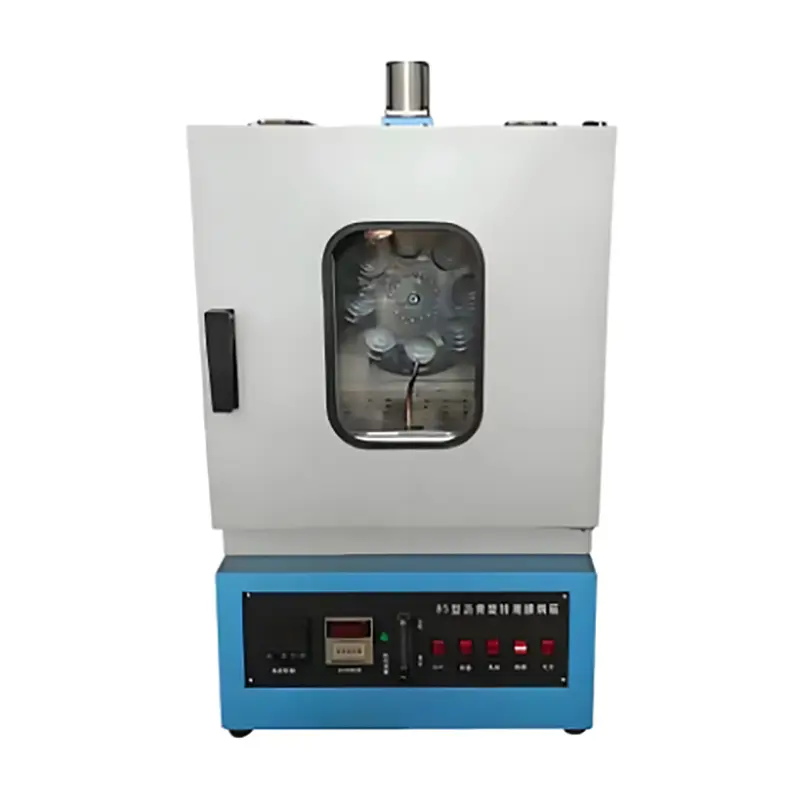
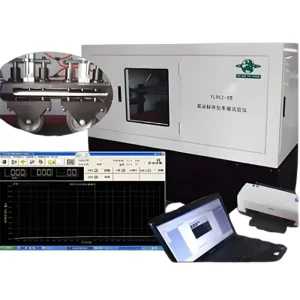
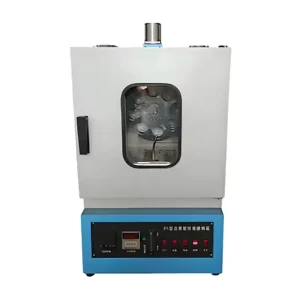
The Thin Film Oven Test (RTFOT) is an experimental device used to simulate the aging process of asphalt under the action of heat and air. Through this Asphalt Rolling Thin Film Oven, the aging performance of asphalt caused by heat and oxidation during construction and use can be evaluated. 

Main features:

1. Simulated aging: Simulate the aging process of asphalt in actual use through heating and air flow.
2. Temperature control: Accurately control the temperature, usually 163 ° C, to ensure consistency in testing conditions.
3. Rotating design: By rotating the bottle, the asphalt forms a thin film, increasing the contact area with air and accelerating the aging process.
4. Automated operation: Some models have automatic control and data recording functions to reduce human errors.

Product Description

Working Principle

Simulate the performance changes of asphalt under heating and air during mixing and construction, and assess the aging performance of asphalt through a short-time test.

🛠

Structural Design

Inner liner and outer shell The inner liner is made of stainless steel with strong heat reflection. The intelligent digital display temperature controller automatically controls the temperature, measures, and has error correction function. The outer middle layer is formed by hot plate bending, and there is silicon wool in the middle for insulation, which effectively reduces heat loss.
Heating and ventilation system Designed for upper and lower convection heating, squirrel cage fan guides flow and controls temperature, reheats to 163℃ 10 minutes after closing the door after loading, built-in air compressor, low noise, no oil return, double-layer design, electric heating system with temperature regulator to continuously maintain the set temperature.
Power system The power source is an advanced permanent magnet synchronous motor and speed changer to ensure that the working turntable rotates reliably at a speed of (15±0.2) r/min.
Air supply system Equipped with a double-layer heat-resistant glass window and a small air compressor. The flow rate is adjusted via a glass rotor flowmeter, spraying dry hot air into the sample bottle through a preheated pipe at a volume of (4000±200) ml.
Temperature control system Intelligent digital temperature controller for automatic control and measurement with error correction. The temperature control accuracy is ±0.5℃.
🧹

Maintenance

1. The Bitumen Thin Film Oven can only be used for asphalt rotating film heating test, the upper temperature limit is 200℃, and the asphalt Rolling Thin Film Oven is equipped with an over-temperature protection function.

2. After use, cut off the power supply, open the door for ventilation, and wipe off the residue in the box.

3. Wash the sample bottle with gasoline or trichloroethylene.

📊

Technical Parameters

1. Voltage 220V±10%; Power 3.5kW
2. Turntable speed 15r/min±0.2r/min, 8 sample bottles can be loaded at a time
3. Temperature control accuracy 163℃±0.5℃
4. Gas supply 4000±200mL
5. Studio size 430×410×400mm
6. Lighting Built-in lighting in the environmental chamber
7. Time setting 1S~99h
8. Thermometer 0~200℃±0.1℃, two units. Calibratable.
9. Dimensions 900*900*1200mm
10. Sample bottle Heat-resistant glass, H: 139.7±15mm, OD: 64±1.2mm, Wall: 2.4mm, Mouth: 31.75mm

Frequently Asked Questions

What is the primary function of the Bitumen Thin Film Oven?
It simulates the aging process of asphalt caused by heat and air during the mixing and construction phases to evaluate its durability.
What is the maximum temperature this equipment can reach?
The equipment has an upper temperature limit of 200℃ and is equipped with an over-temperature protection function for safety.
How many samples can be tested at once?
The working turntable is designed to load up to 8 sample bottles simultaneously, rotating at a precise speed of 15r/min.
Is the temperature control accurate enough for standard tests?
Yes, it uses an intelligent digital controller with an accuracy of ±0.5℃ at the standard test temperature of 163℃.
How should I clean the sample bottles after testing?
Sample bottles should be washed with gasoline or trichloroethylene to effectively remove asphalt residue.
How does the air supply system work?
A built-in air compressor sprays dry hot air at a rate of 4000±200mL/min into the sample bottles through a fully preheated ventilation pipe.

Related Products