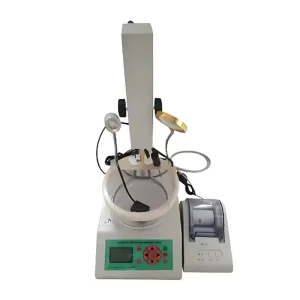
Custom Liquid Steady-state Permeameter For Core And Cement Testing Manufacturers, Quotes

The porosity and permeability of rocks are key physical parameters that measure their storage and seepage capacity, directly determining the occurrence and development potential of oil and gas resources. Porosity reflects the rock's spatial capacity for fluid storage, while permeability indicates the ease with which fluids migrate through the rock. Together, they constitute core indicators for assessing reservoir quality.

Product Description

1
Testing Principle
Steady-State Method: Suitable for medium-to-high permeability rock types, such as sandstone and conglomerate. By applying a steady pressure differential across the core, a fluid is forced through at a steady rate, and permeability is calculated based on Darcy's law.
Pulse Method: Suitable for low-permeability cores, such as shale, mudstone, and tight sandstone. A pressure pulse is momentarily applied to one end of the core, and the pressure decay over time is recorded at both ends.

2
Testing Process
Steady-State Method Steps:
Sample Preparation: Select rock sample and process into standard plunger shape. Measure length, diameter, and area. Clean and dry to remove impurities.
Connecting Apparatus: Load sample into holder, ensuring axial flow only. Connect pump, pressure sensor, and flow meter.
Permeability Measurement: Introduce nitrogen, adjust displacement pressure for steady flow. Record pressures, flow rate, and temperature.
Calculation: Use Darcy's law to substitute measured data for permeability.
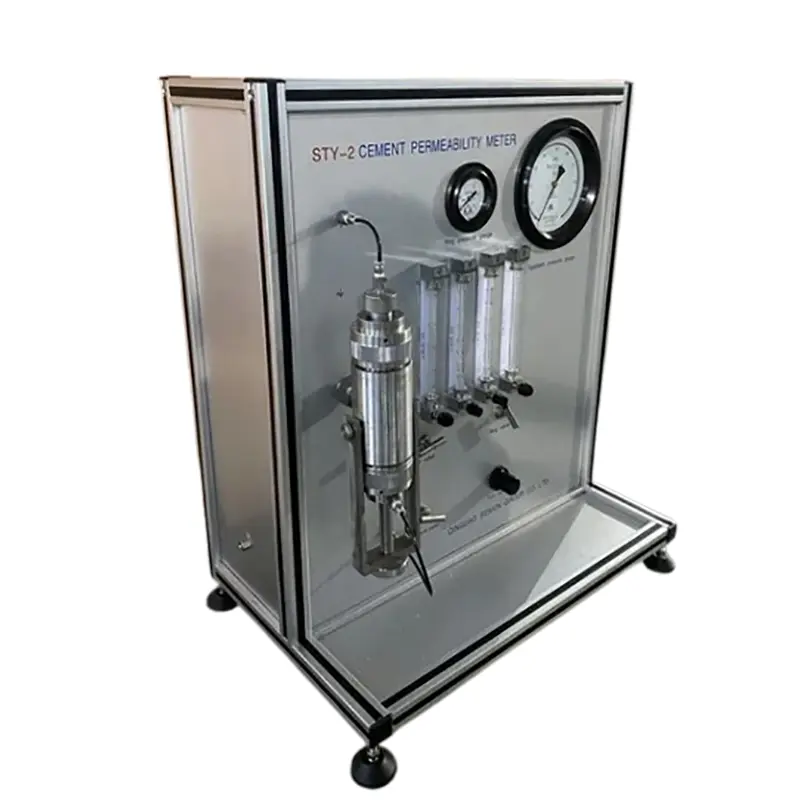
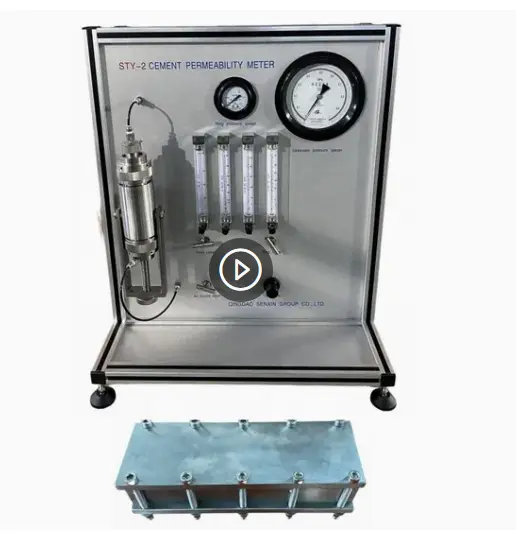
Steady-State Method Diagram
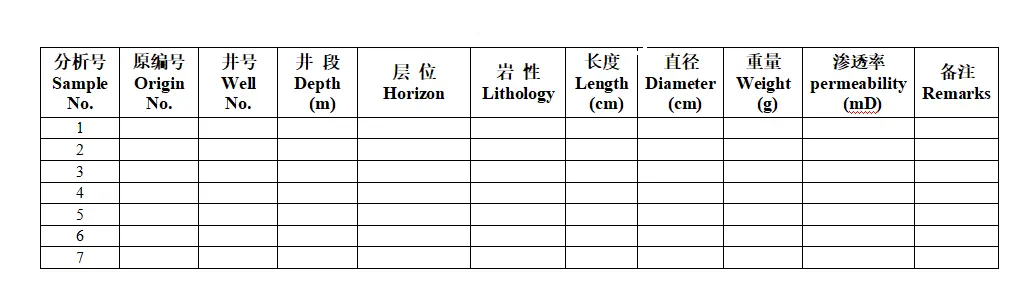
Data Chart
Pulse Method Steps:
Sample Preparation: Core must be fully saturated with fluid (usually kerosene).
Experimental Apparatus: Connect core to reservoirs at both ends (pulse port and reference port). Seal and remove bubbles.
Apply the Pulse: Rapidly open valve to increase pressure momentarily. Record the pressure decay curve over time.
Calculation: Calculated based on pressure decay equation (diffusion theory) and core parameters.
3
Equipment Composition
Constant flow pump: 1 set, working pressure 40MPa, flow rate: 0.01 ~ 10ml/min, accuracy 1%.
Intermediate vessel: Volume 500ml, pressure 42MPa, 316L stainless steel, 2 pieces.
Core holder: 1 set, accommodates Φ 25mm × (25-100) mm cores, pressure 42MPa, 316L stainless steel.
Manual metering pump: 1 set, pressure 40MPa; supports liquid permeability and displacement experiments.
Frequently Asked Questions
Q1: Which method is best for low-permeability rock like shale?
The Pulse Method is specifically designed for low-permeability cores like shale and mudstone as it measures pressure decay rather than requiring a steady flow rate.
Q2: What are the main materials used for the equipment?
High-grade 316L stainless steel is used for the core holder and intermediate vessels to ensure pressure resistance up to 42MPa and corrosion resistance.
Q3: What core sizes can the standard holder accommodate?
The standard core holder can accommodate samples with a diameter of 25mm and lengths ranging from 25mm to 100mm.
Q4: Why is sample cleaning necessary before testing?
Cleaning and drying are critical to remove impurities and residual fluids from the pores, ensuring the measured permeability accurately reflects the rock structure.
Q5: How is the fluid flow ensured to be accurate in the steady-state method?
A high-precision constant flow pump is used with a flow accuracy of 1%, and the holder is sealed to ensure only axial flow occurs through the sample.
Q6: What fluid is typically used for the pulse method?
The core is usually saturated with a liquid such as kerosene to ensure consistent pressure response during the pulse application.

Related Products