 Zealchon Electronic
1 / 1
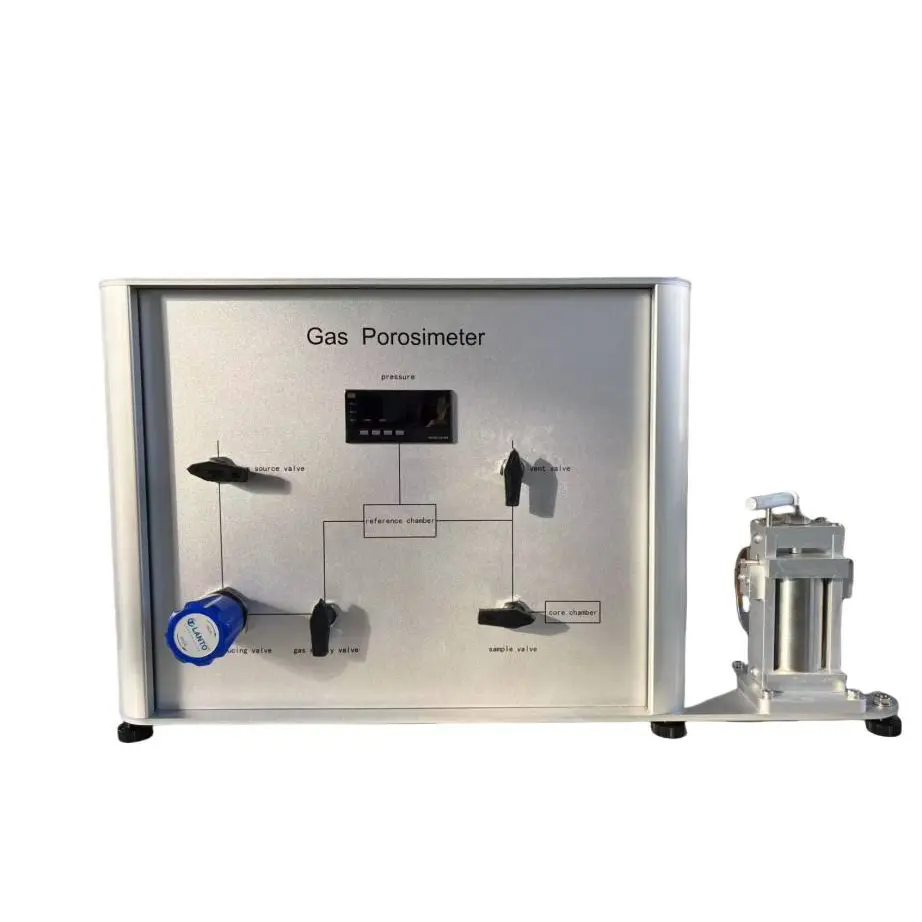
The main goal is to calculate the effective porosity, which is the volume of the interconnected pores that can contain and transmit fluids (like oil, gas, or water). This is different from total porosity, which includes isolated pores.
The formula for porosity (Φ) is:
The instrument provides a highly accurate measurement of the pore volume, which is used in this calculation.
| Item | Automatic porosity meter for core testing |
| Power Supply | 50Hz, AC 220V |
| Testing Range | ≥ 1% |
| Working Pressure | 0.02 - 0.5 MPa |
| Working Temperature | Room Temperature |
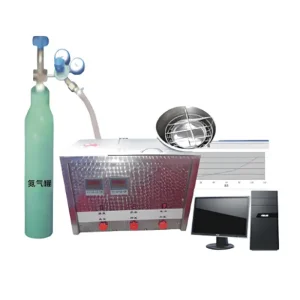
| Test Gas | Helium |
| Core Size | Max Diameter 1 inch, Max Length 2.5 inches |
| Pressure Sensor Accuracy | 0.1% FS (Full Scale) |
Helium is the ideal gas for this measurement due to its unique properties:
Helium atoms are tiny and can penetrate even very minute micropores that other gases or liquids cannot access.
Helium is non-reactive and won't adsorb onto the rock surface or react with the sample, which could alter the measurement results.
It behaves very closely to an ideal gas across a wide range of temperatures and pressures, making calculations based on gas laws (Boyle's Law) extremely accurate.
A: Effective porosity measures only the interconnected pores capable of fluid flow, whereas total porosity includes isolated pores that do not contribute to permeability.
A: With an accuracy of 0.1% FS, the pressure sensor ensures that the volume calculations derived from gas expansion laws are highly precise and repeatable.
A: While other gases can be used, Helium is preferred because its small molecular size allows it to enter the smallest pores, providing the most accurate effective porosity data.
A: The instrument accommodates core samples with a maximum diameter of 1 inch and a maximum length of 2.5 inches.
A: No, the testing is performed at room temperature, making it easier to maintain a stable environment for accurate readings.
A: Yes, the testing range covers anything ≥ 1%, which is suitable for a wide variety of reservoir rock types including tight formations.