⚙️
Main Features
✓
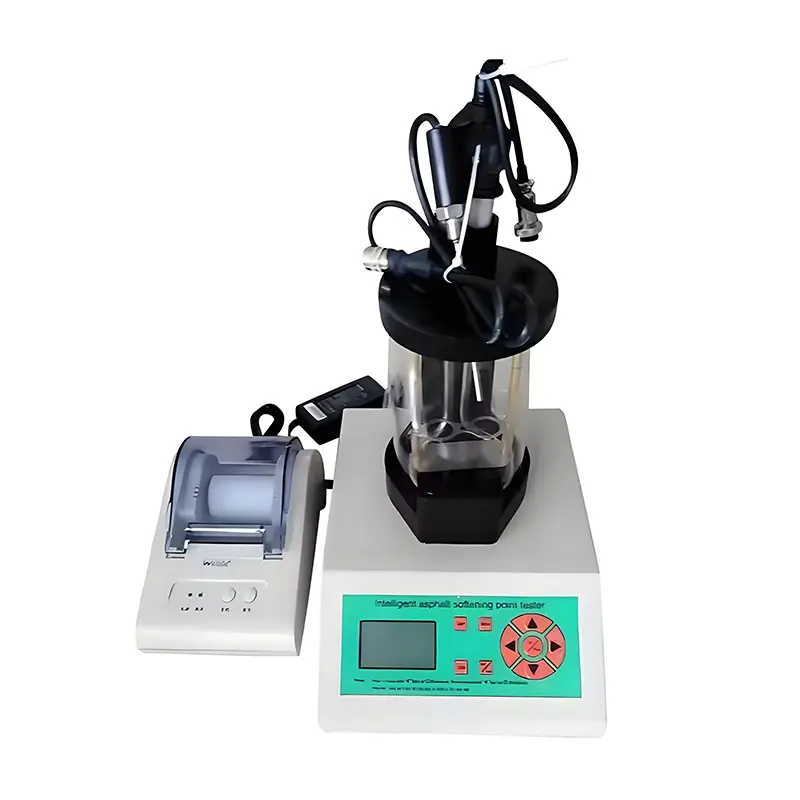
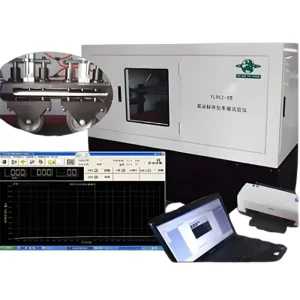
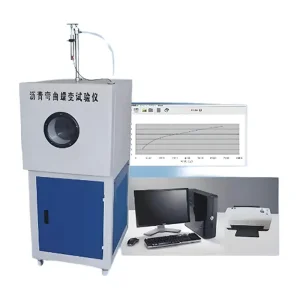
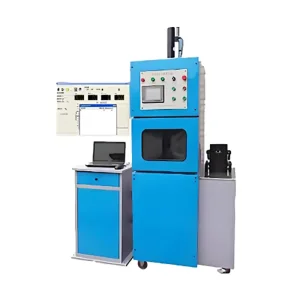
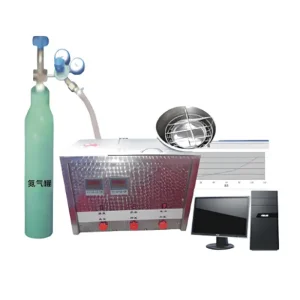
Automatic temperature control by high-precision instrument to eliminate human error.
✓
Highly sensitive external temperature probe for real-time monitoring.
✓
Speed control via PID plus fuzzy logic algorithm for linear temperature rise.
✓
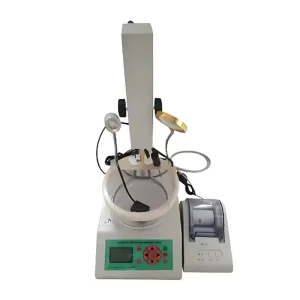
Built-in backlit blue screen display, environmentally friendly and intuitive.
✓
Modern appearance with ergonomic design for convenient operation.
✓
Integrated magnetic stirring device ensures uniform test temperature.
✓
Dual recording modes (Automatic & Manual) with automatic average value calculation.
📊
Main Technical Indicators
| Temperature Measurement Range |
-5℃ to 125℃ |
| Test Range |
5℃ to 90℃ |
| Heating Rate |
(5±0.5)℃/min |
| Heating Method |
PID + Fuzzy Logic Algorithm, Magnetic Stirring |
| Detection Method |
Automatic and Manual Detection |
| Steel Ball Mass |
3.5g ± 0.05g |
| Steel Ball Diameter |
9.53mm |
| Steel Ball Sinking Distance |
25.4mm |
| Timing Range |
0-99 minutes 99 seconds |
| Temperature Accuracy |
0.1℃ |
| Power |
1kW |
| Dimensions |
340 x 230 x 340mm |
| Weight |
4.5kg |
| Power Supply |
220V |
| Ambient Humidity |
≤85% |
🛠️
Operation Practice
1
Place 800-1000ml of distilled water in a beaker. Adjust quantity based on indoor temperature.
2
Adjust the beaker water temperature to 5℃ using ice or heating.
3
Position the magnetic stirrer at the center bottom of the beaker.
4
Insert samples into the loop and place two balls in the specimen center. Heat for less than 15min.
5
Place the beaker into the test device and connect the power.
6
Turn on the power and press "Start". Adjust stirring speed; stop stirring as the softening point nears.
7
The test ends when the sample drops 25.4mm, signaled by an alert.
8
Press "Result" to display the average temperature.
Note: Do not press the "Reset" button during the active test process.
❓
Frequently Asked Questions
What domestic and international standards does this device comply with?
The asphalt softening point tester fully complies with mainstream standards including ASTM D36, AASHTO T53, EN 1427, and domestic standards like GB/T 4507 and JTG E20-2011. It supports one-click switching of testing modes.
How are the temperature control accuracy and heating rate ensured?
The equipment uses a microcomputer PID algorithm combined with a high-sensitivity PT100 temperature sensor. This allows real-time power adjustment to maintain a strict heating rate of 5.0 ± 0.5 ℃/min, ensuring stable and accurate results.
Is it fully automated testing or semi-automatic?
It is a fully automatic intelligent model. Using photoelectric laser blocking sensors, the system captures the softening point temperature in microseconds when the ball drops 25.4mm, automatically calculating the average of parallel tests.
Can this device test modified asphalt with high softening points?
Yes. The device supports "dual media" mode: Water for ordinary asphalt (30-80℃) and Glycerol/silicone oil for modified or high-viscosity asphalt (80-160℃ or higher).
What safety measures are in place for high-temperature testing?
The unit includes overheating and dry-burning protection, automatically cutting power if limits are exceeded. It also features explosion-proof glass beakers, insulated shells, and abnormality alarms to prevent boiling or asphalt decomposition.
How can I export the test data?
The instrument features built-in memory for hundreds of data sets, an optional micro-thermal printer for instant receipts, and RS232/USB interfaces for seamless integration with Laboratory Information Management Systems (LIMS).
 Zealchon Electronic