In the contemporary landscape of civil engineering, the Dynamic Cone Penetrometer (DCP) has emerged as an indispensable tool for rapid, in-situ evaluation of soil strength and pavement layer properties. As global infrastructure investments surge—driven by rapid urbanization in Southeast Asia, massive road rehabilitation projects in North America, and Belt and Road initiatives across Africa—the demand for reliable, portable, and cost-effective testing instruments has reached an all-time high.
Unlike traditional California Bearing Ratio (CBR) tests that often require time-consuming laboratory procedures, the DCP test offers immediate results, allowing engineers to determine the structural integrity of subgrades and base layers in minutes. This "on-the-spot" data collection is critical for quality control in highway construction, airport runway maintenance, and railway embankment monitoring.
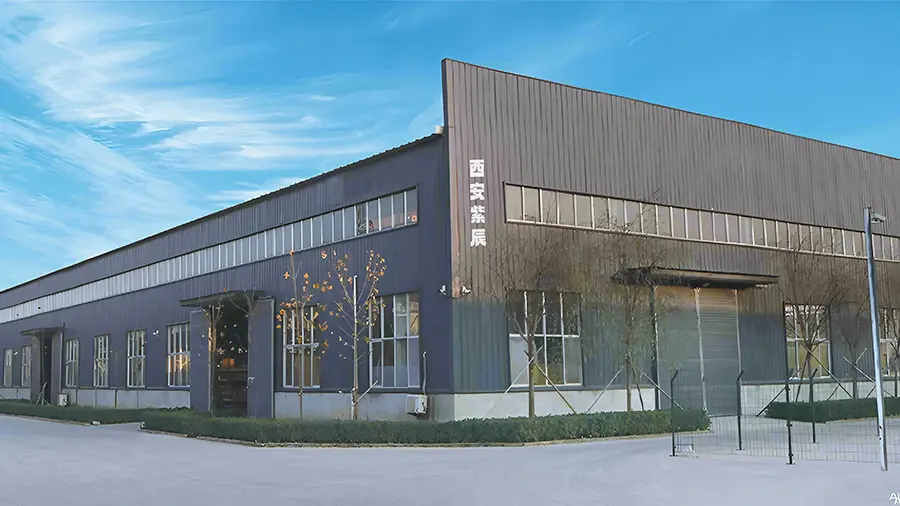
Under the guidance of researchers from Chang'an University Highway College and Xi'an University of Technology, we integrate cutting-edge soil mechanics into every DCP unit.
Our workshop utilizes CNC lathes, argon arc welding, and precision grinding to ensure hammer weights and cone angles (60°) meet strict ASTM D6951 standards.
The "Xiya" trademark is recognized for filling technical gaps in geotechnical testing, winning ministerial and provincial awards for structural testing innovation.
Xi'an, as a historic hub of education and high-tech development, provides a unique ecosystem for the production of sophisticated civil engineering instruments. Xi'an Zealchon Electronic Technology Co., Ltd. leverages this ecosystem to provide unmatched advantages to global buyers:
Identify "soft spots" in pavement subgrades before paving asphalt, preventing future subsidence and costly repairs.
Rapidly assess the bearing capacity of unpaved roads in disaster zones to ensure heavy emergency vehicles can pass safely.
Determine soil stability for utility pole foundations in remote areas where transporting heavy drilling rigs is impossible.
Monitor the compaction levels of ballast and sub-ballast layers to maintain high-speed rail safety standards.
The industry is moving away from manual "pen and paper" logging. The next generation of DCP instruments—already in development at Zealchon—features:
| Feature | Manual DCP | AI-Integrated Digital DCP |
|---|---|---|
| Data Recording | Manual tape measurement | Automated laser/magnetic sensors |
| Human Error | High (Miscounting blows) | Zero (Electronic pulse counting) |
| Analysis Speed | Days (Office calculation) | Instant (App-based CBR correlation) |
| Traceability | Paper logs | Cloud-stored GPS-tagged reports |
We understand the complexities of international trade in the engineering sector. Our export division is equipped to handle the specific needs of:
The DCP penetration rate (mm/blow) is widely used to estimate the California Bearing Ratio (CBR) using established formulas, such as Log10(CBR) = 2.48 - 1.057 * Log10(mm/blow). This allows for rapid pavement design validation.
Yes, our Dynamic Cone Penetrometers are manufactured to meet or exceed ASTM D6951/D6951M-18 requirements, including the standard 8-kg (17.6-lb) hammer and the 60° hardened steel cone.
Every unit comes with a factory inspection certificate. We also offer professional third-party calibration support for enterprise clients who require ISO-certified documentation.
For standard units, we maintain a rolling stock that allows for dispatch within 3-5 business days. Custom-engineered rods or digital interfaces typically take 15-20 days.
 Zealchon Electronic