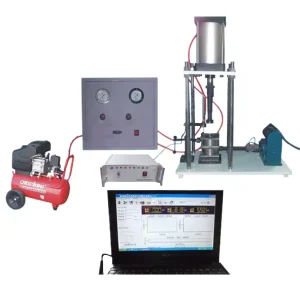
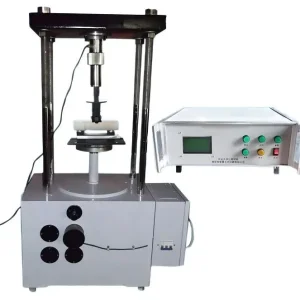
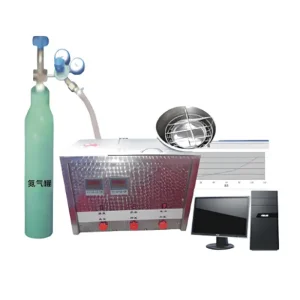
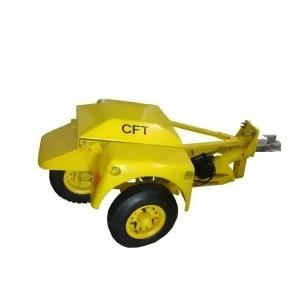
Explore our premium select range of high-performance custom instruments engineered for civil construction, runways, and structural integrity analysis.
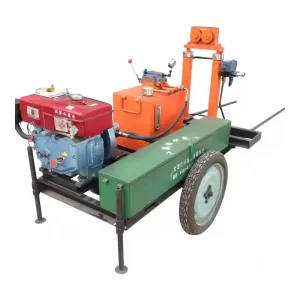
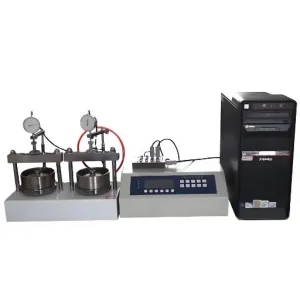
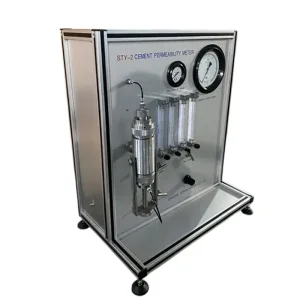
In structural, highway, and civil engineering, soil compaction is a critical factor influencing the bearing capacity, permeability, and settlement potential of foundations. The Proctor Density Test stands as the foundational laboratory methodology worldwide to determine the relation between soil moisture content and dry density. Understanding this relationship allows project engineers to achieve maximum compaction efficiency on site, preventing catastrophic settlement failures of foundations, highway embankments, and airfield pavements.
Historically introduced by Ralph R. Proctor in 1933, the test established that for a given compactive effort, there exists a unique Optimum Moisture Content (OMC) at which the soil achieves its Maximum Dry Density (MDD). Modern engineering categorizes this testing under two primary configurations:
Standard off-the-shelf compaction apparatuses frequently struggle to deliver precise energy calibrations across different soil lithologies. Custom-designed Proctor Test systems solve this by incorporating programmable blows-per-layer, adaptive mold diameters (4-inch vs. 6-inch variants), and variable-weight rammers. These technical modifications allow researchers and operators to tailor testing protocols to match highly irregular, local geographic soil matrices (e.g., highly expansive clays or coarse-grained gravel soils) with unparalleled repeatability.
An industrial-grade Automatic Proctor Density Test Apparatus integrates mechanical precision, robust metallurgy, and digital automation. The efficiency of laboratory workflows hinges upon the reliability of these units. Below, we examine the typical specifications of manual and automatic systems engineered in our state-of-the-art facilities.
| Component / Parametric Indicator | Standard Compactor Setup | Heavy-Duty Modified / Custom Setup | Smart Digital Compactor Series |
|---|---|---|---|
| Mold Internal Diameter | 4.0 in (101.6 mm) | 6.0 in (152.4 mm) | Dual Compatible (Quick-change platform) |
| Rammer Weight / Drop | 5.5 lb (2.5 kg) / 12 in (305 mm) | 10.0 lb (4.54 kg) / 18 in (457 mm) | Auto-Switchable Adjustable Drop & Weight |
| Compactive Effort (Energy) | ~600 kN-m/m³ | ~2,700 kN-m/m³ | Programmable (Up to 3,000 kN-m/m³) |
| Mold Material | Zinc-plated structural steel | Heavy-wall corrosion-resistant alloy steel | Hardened Tool Steel (Industrial Grade) |
| Control Mechanism | Manual lever & gravity guidance | Mechanical chain-lift / motor system | PLC Touchscreen with Automated Layer Counter |
| Energy Loss Compensation | Dependent on operator style | Standard mechanical counterweight | Precision guided slide, friction-free drop profile |
Customized variations can integrate advanced pneumatic lift systems, variable drop heights, and safety enclosure frames to limit sound pollution and prevent occupational hazards in high-throughput materials testing laboratories.
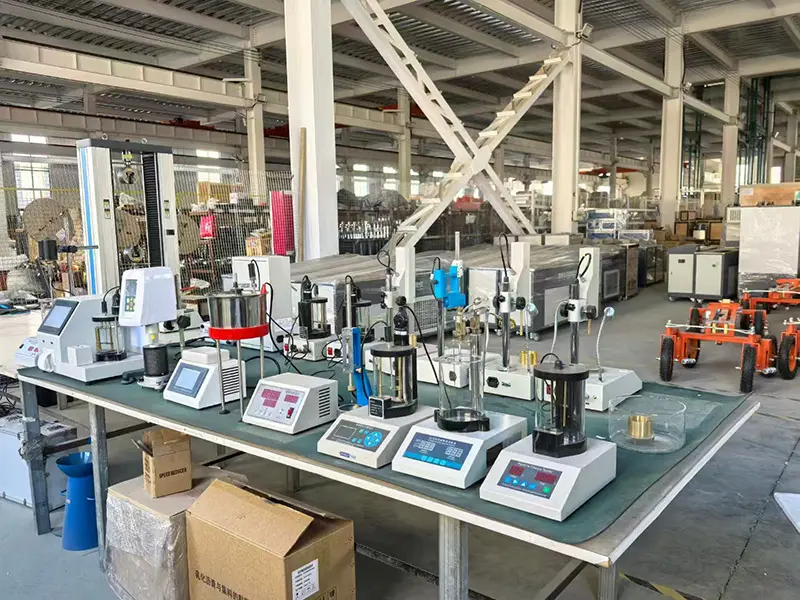
Boasting over 15 years of civil engineering development background, Xi'an Zealchon operates from the high-technology industrial development zone in the historic city of Xi'an, China. Occupying a facility encompassing 7,500 square meters of specialized manufacturing space, we design and produce premium geotechnical and materials testing equipment.
Our structural design team is composed of seasoned researchers and engineering veterans originating from prominent institutions, including Chang'an University Highway College, the Air Force Engineering University, and the Xi'an University of Technology. This elite academic synergy has driven the development of several proprietary testing products that address critical testing gaps, earning various ministerial and provincial recognitions. The trademark "Xiya" stands as a certified Shaanxi Province symbol of quality.
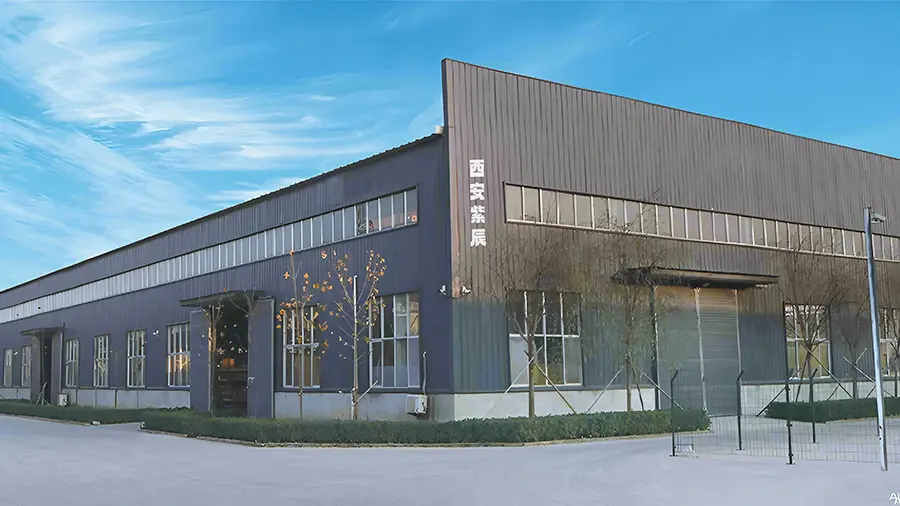
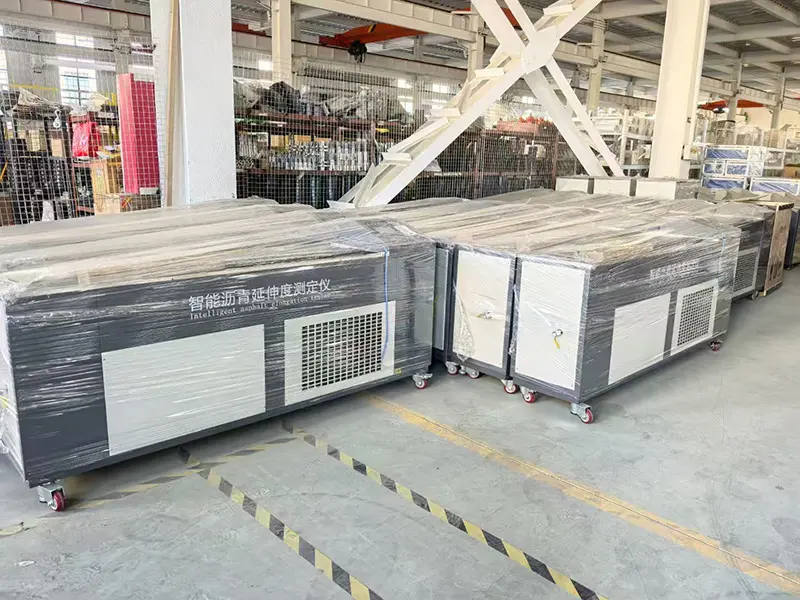
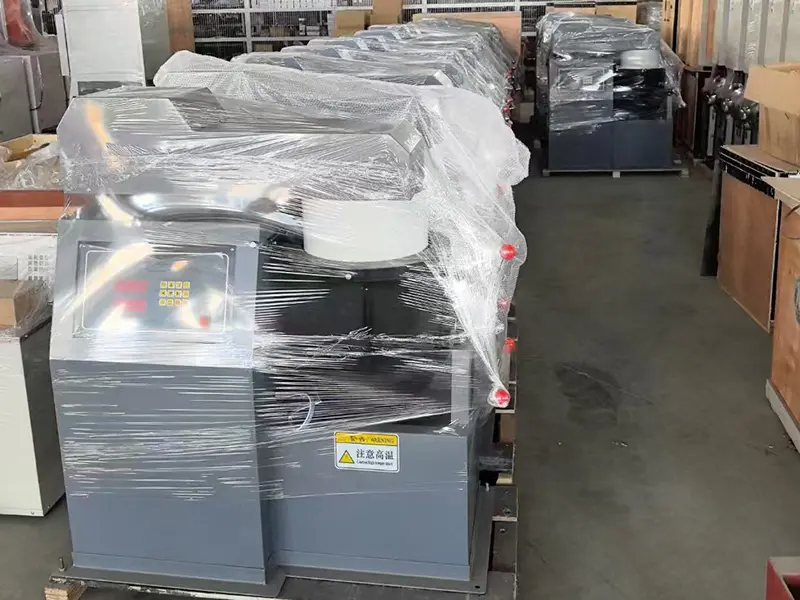
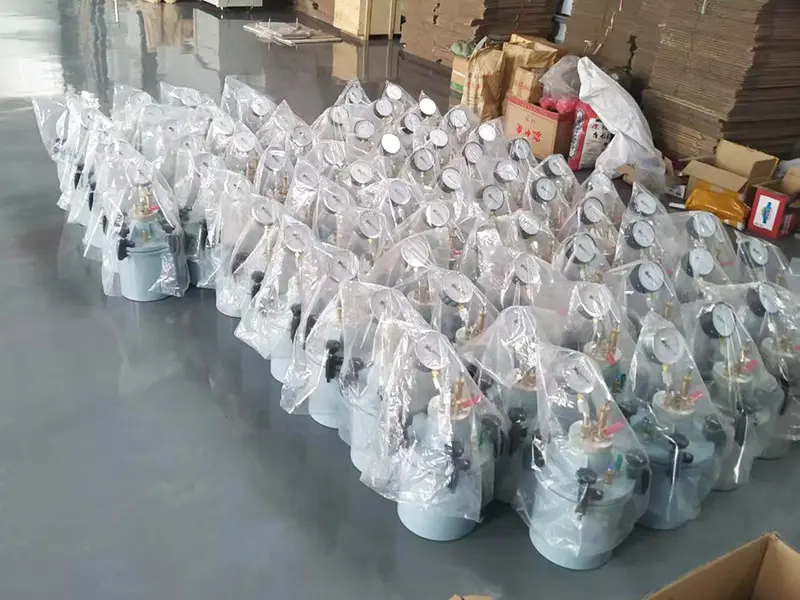
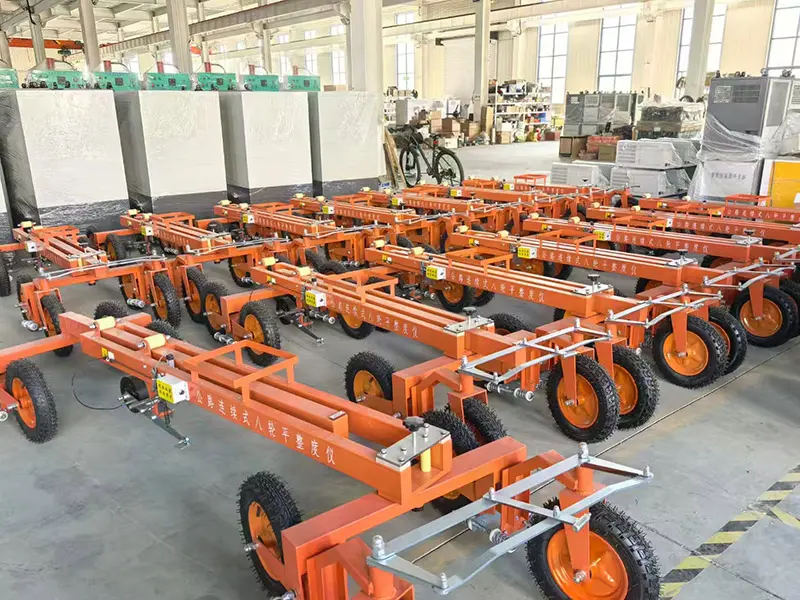
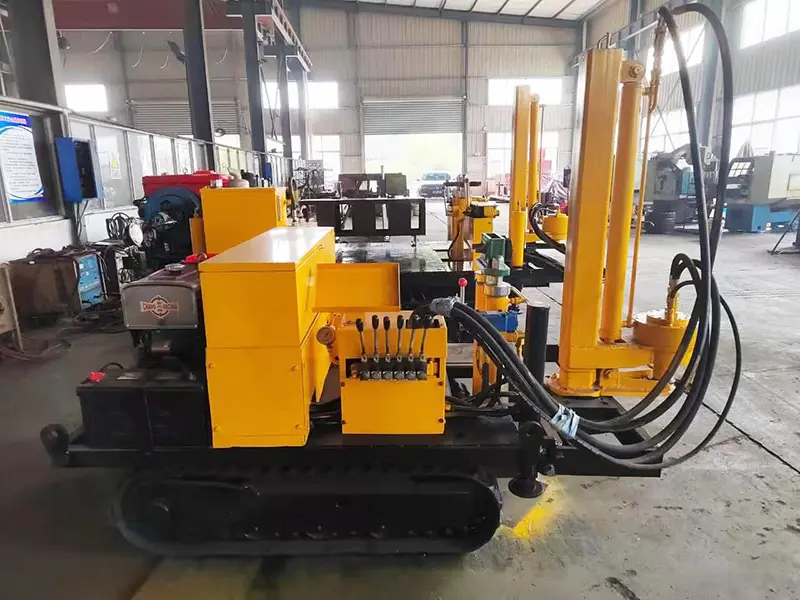
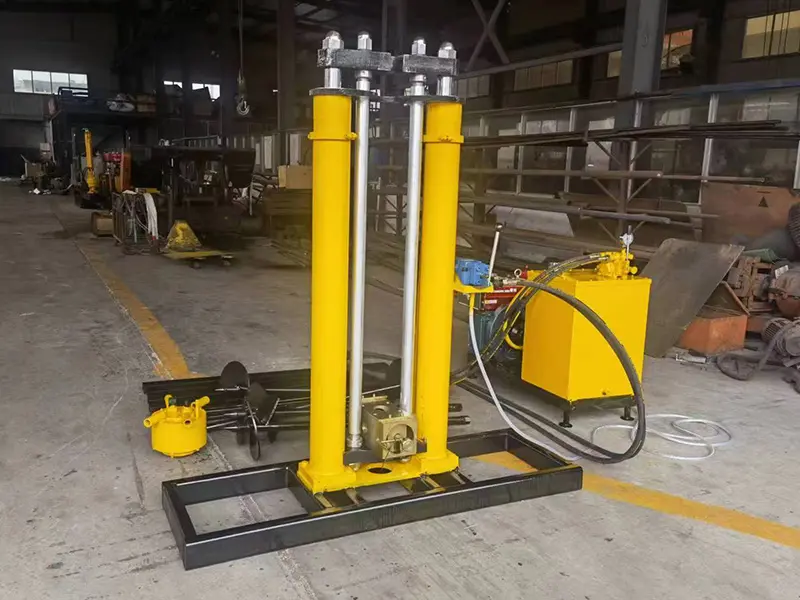
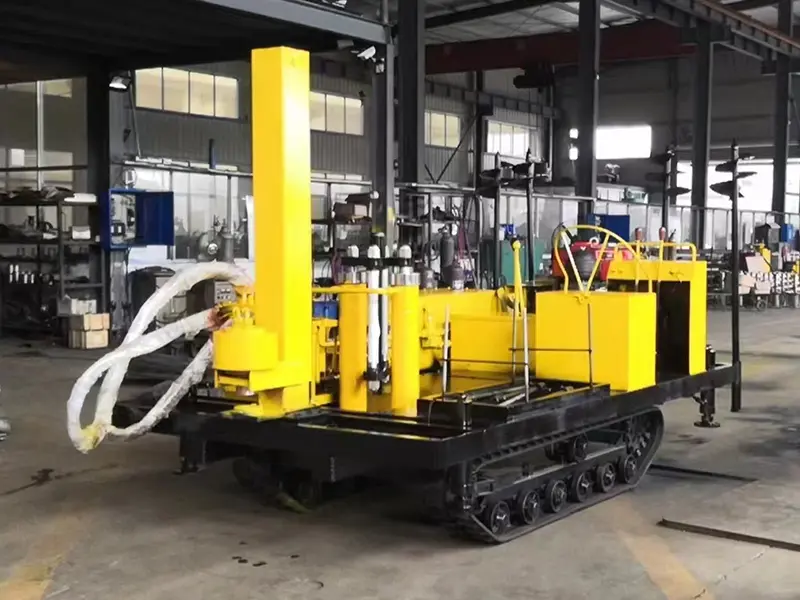
Zealchon's self-contained production workshop features robust vertical integration. Equipped with **machining centers, CNC lathes, precision milling machines, planers, grinders, shearing machines, bending units, electric welders, and specialized argon arc welders**, we control every stage of manufacturing.
By minimizing external subcontracting dependencies, we buffer our global clients against geopolitical supply disruptions, raw material cost spikes, and lead-time delays. This complete engineering command ensures that custom modifications for Proctor molds and automatic compactors are processed quickly, transitioning from CAD concepts to physically calibrated units within brief, reliable lead times.
The company maintains a production and sales service mechanism strictly aligned with current ASTM, AASHTO, and BS international testing codes. We proudly offer a comprehensive "Three Guarantees" warranty policy alongside direct technician-to-client support channels.
Soil compaction testing has evolved beyond manually recording mechanical drops. Modern megaprojects—including heavy-haul rails, hydroelectric dams, and high-frequency airfield runways—demand digitalized data acquisition, traceability, and high efficiency.
Integrating compactors with smart cloud networks allows testing labs to stream moisture-density data curves in real-time, removing human input errors and streamlining engineering sign-offs.
Configurable designs accommodate ASTM D698, ASTM D1557, AASHTO T99, and BS 1377:4 standards. Lab managers can seamlessly swap testing configurations on a single platform.
Our apparatuses incorporate safety interlocking doors, CE-compliant emergency stops, and acoustic dampening panels to ensure quiet, safe indoor laboratory operation.
Our development roadmap focuses on integrating non-nuclear sensors and automatic moisture adjustments directly into the compaction chamber. Future Proctor apparatuses will measure density changes during compaction, allowing researchers to estimate the Optimum Moisture Content dynamically within a single, continuous test sequence.
Navigating the global market for a custom Proctor density test apparatus requires analyzing key factors that influence system pricing. The pricing table below provides estimated cost structures based on instrumentation sophistication, automation level, and certification standards.
| Apparatus Configuration Class | Typical Target Audience | Standard Compliance Profile | Estimated Price Range (USD) | Lead-Time & Customs Clearance |
|---|---|---|---|---|
| Manual Proctor Mold & Rammer Kit | Academic institutions, on-site field testing kits | ASTM D698, AASHTO T99, BS 1377 | $350 – $900 | Shipped in 3-5 working days from stock |
| Semi-Automated Laboratory Compactor | Commercial testing firms, local highway departments | ASTM D698, ASTM D1557, AASHTO T180 | $3,500 – $6,500 | Custom calibration takes 10-15 business days |
| Full CNC Smart Auto-Compactor System | National tier-1 testing centers, aerospace, mining labs | EN, ASTM, AASHTO (Multi-standard compatible) | $8,000 – $14,500 | Production to delivery takes 20-30 business days |
| Fully Customized Smart Research System | State-level research centers, university research labs | Tailored per specifications (e.g., custom energy outputs) | Contact for Custom Quote | Dependent on client custom specifications |
Note: The prices listed above serve as general estimates. Actual prices vary based on chosen configurations, steel market trends, customized program modifications, and order quantities. Bulk procurement discounts are available for commercial testing firms and university laboratory networks.
Get answers to common questions about Proctor Compaction Testing, apparatus calibrations, and customizing your equipment.
Maintain your lab's testing accuracy with our full suite of materials testing instruments, custom designed for civil construction and research.
 Zealchon Electronic