High-Quality Soil uniaxial compression deformation rebound modulus (Poisson's ratio) tester Pricelist, Quotes

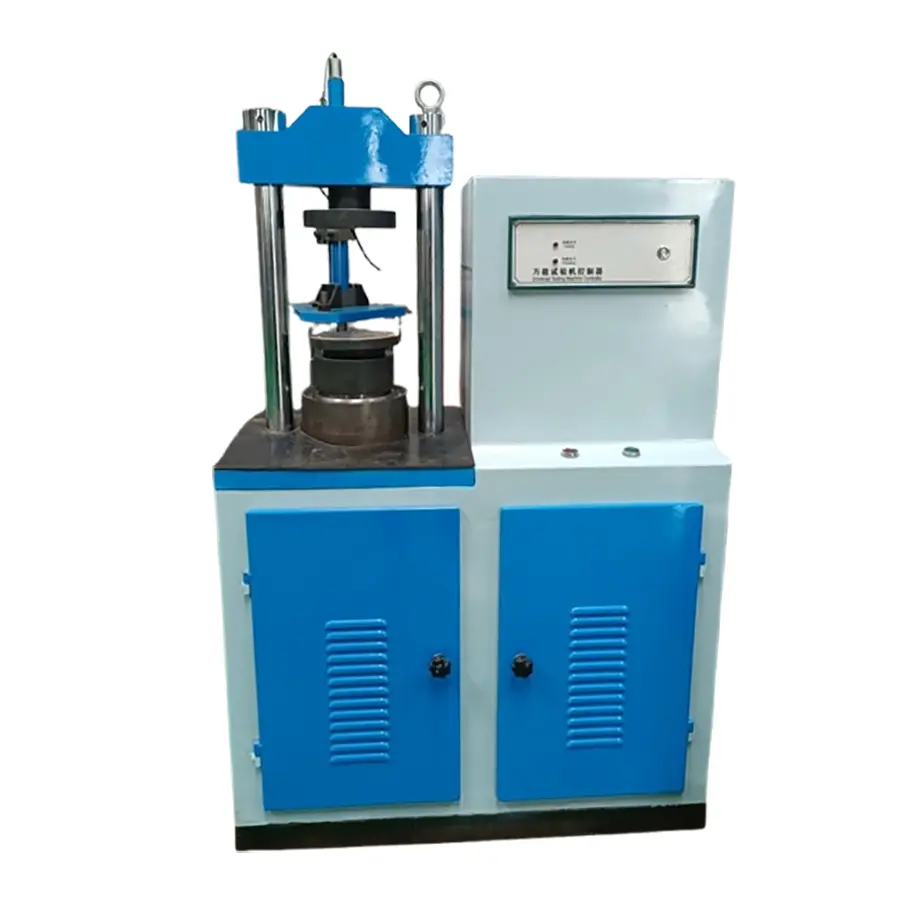
The Soil Uniaxial Compression Deformation Rebound Modulus (Poisson's Ratio) Tester measures the uniaxial tensile strength of soil, which is the ultimate normal stress at which a specimen reaches fracture under axial tension alone.
Uniaxial tensile strength is measured by applying progressive axial tension to cylindrical or rectangular specimens until the specimens fracture. It is suitable for clay soils.

Product Description

i

Product Description

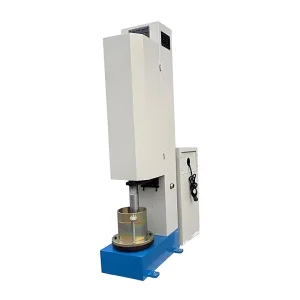
The Uniaxial Compression Bending-Tension Tester is specifically designed for testing axial forces on specimens under uniaxial compressive stress conditions. It serves as a vital instrument for measuring the unconfined compressive strength of various specimens.

This versatile machine measures flexural strength, axial compressive strength of cylinders, and the static compressive elastic modulus. These measurements provide essential parameters for determining loading standards. The testing process utilizes the standardized three-point compression method to ensure accuracy and repeatability.

Additionally, it is capable of measuring the flexural-tensile rebound modulus under static load using the precise three-point loading method.

Performance Features and Functions

System Composition
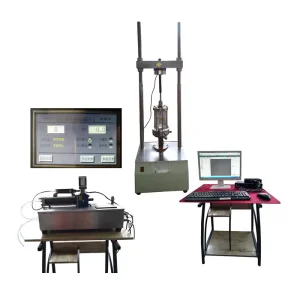
Integrates a main unit, compression and bending-tension mechanism units, an automatic control system, and a dedicated computer-based software and data acquisition system.
Drive & Control
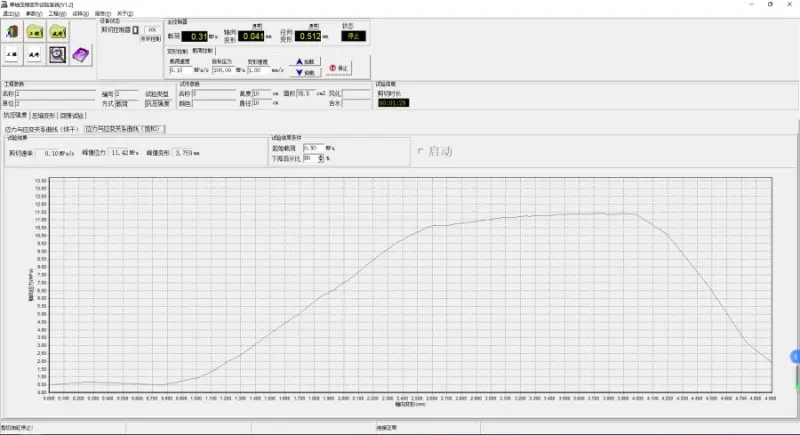
Driven by a servo/variable frequency motor with a full digital closed-loop control system. Features dynamic test curve display and advanced data re-analysis capabilities.
Multi-Mode Testing
Supports constant loading force for displacement collection and constant displacement for peak value tracking and residual force measurement.

Supported Specimen Specifications:

  • Beam Specimens: 50×50×200mm; 100×100×400mm; 150×150×550mm (Bending tests)
  • Cylindrical (Standard): Φ150×150mm; Φ100×100mm (Strength, deformation, and splitting)
  • Cylindrical (Large): Φ150×300mm (Axial compression, elastic modulus, and Poisson's ratio)

Technical Parameters

Maximum Test Force 300 kN
Accuracy Class 1
Test Force Measurement Range 0.4% to FS (Full Scale)
Test Force Indication Error Within ±0.5% of indicated value
Test Force Resolution ±1/300,000 of maximum force
Force Control Rate Adjustment 0.005 to 5% FS/s
Rebound Deflection Range 0 to 50 mm, Accuracy 0.001 mm
Constant Force Control Range 0.5% to FS
Deflection Measurement 0-8mm, accuracy 0.001 (Poisson's ratio)
Piston Maximum Stroke 150mm
Platen Maximum Distance 450mm
Power Supply 380V/50Hz, ±10%
Machine Weight 300kg

Frequently Asked Questions

What are the primary applications of this tester?
It is primarily used for measuring unconfined compressive strength, flexural strength, axial compressive strength of cylinders, and static compressive elastic modulus.
What types of control modes are available during testing?
The instrument supports both constant loading force and constant displacement control modes, using a full digital closed-loop system for high precision.
Which specimen shapes and sizes can be accommodated?
It supports beam specimens up to 150x150x550mm and cylindrical specimens up to Φ150x300mm for various tests like splitting, Poisson's ratio, and elastic modulus.
What is the accuracy level of the test force?
The machine is rated Class 1 with a test force indication error within ±0.5% and a resolution of ±1/300,000 of the maximum force.
How is the test data managed?
Tests are controlled via computer software that provides real-time dynamic curve displays and allows for post-test data processing, re-analysis, and editing.
What is the maximum stroke and power requirement?
The cylinder piston has a maximum stroke of 150mm, and the system requires a 380V/50Hz (±10%) power supply.

Related Products