High-Quality Rock Compressive Crushing Strength Point Load Test Apparatus Tester Supplier, Pricelist

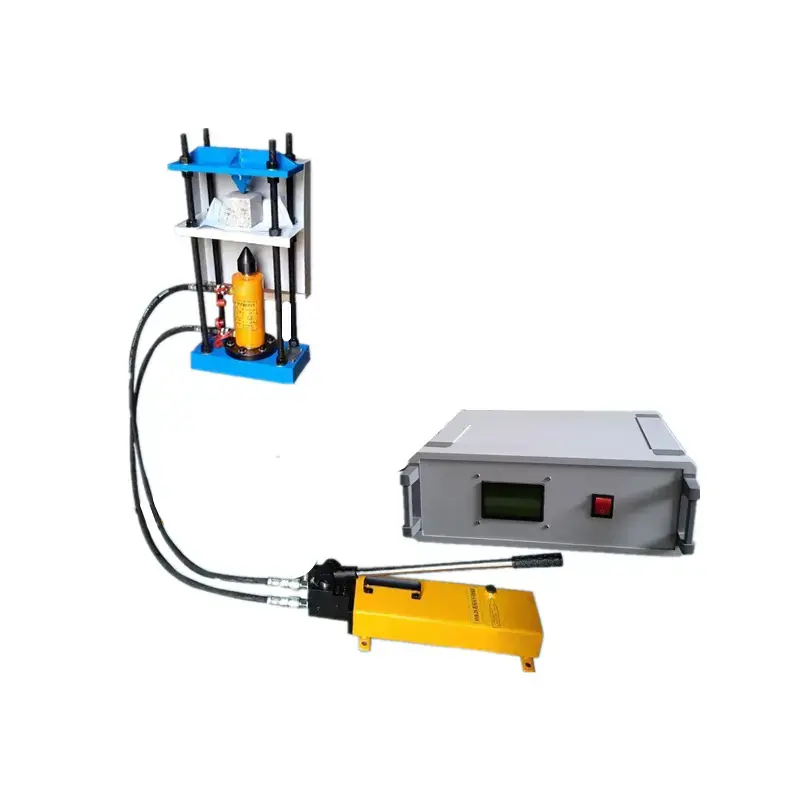
Rock point load tester is a portable on-site testing device used to determine the point load strength of rocks, mainly used to evaluate the tensile and compressive strength characteristics of rocks.

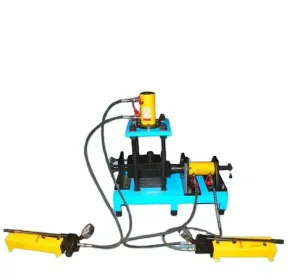
The rock point load tester is to place the specimen between two spherical end (conical) loading devices, and apply concentrated load to the specimen by manual oil pump pressure until the specimen is destroyed. Based on this, the rock point load strength index and anisotropy index are obtained. Suitable for all types of rocks (except for extremely soft rocks), it can provide a basis for rock grading and calculating rock compressive strength parameters according to formulas. Used for indoor and on-site testing, easy to carry.

Product Description

Product Description

Main Purpose

Strength testing: indirectly determine the uniaxial compressive strength (UCS) and tensile strength of rocks through point load tests.
Rock mass classification: rock mass quality grading in auxiliary engineering geological exploration (such as RQD, rock mass strength assessment).
On site rapid testing: suitable for field or laboratory testing, without the need for complex sample preparation, directly testing irregular rock blocks.

Working Principle

Apply concentrated point load to the rock sample until failure, and record the maximum load (P) and the distance between the two pressure heads (D) at the time of failure.
Calculate the point load strength index: I₂ = P/D² (Unit: MPa).
Convert uniaxial compressive strength through empirical formula: UCS = k · I₂ (k is the conversion coefficient, usually 14-24).
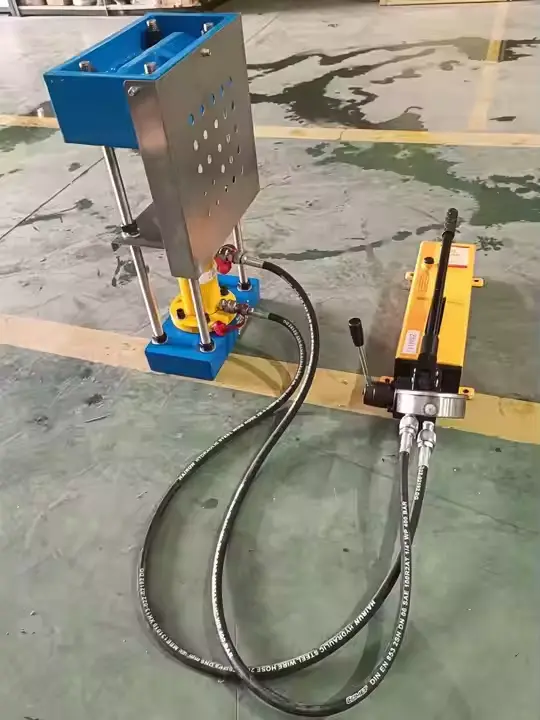
Point Load Testing Equipment

More Function

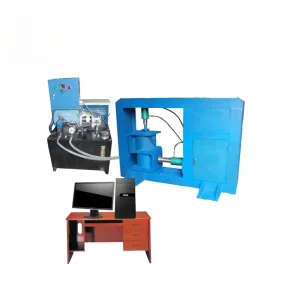
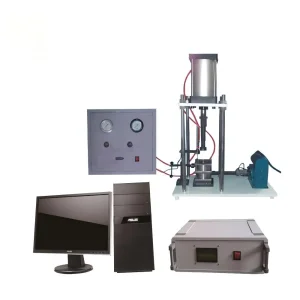
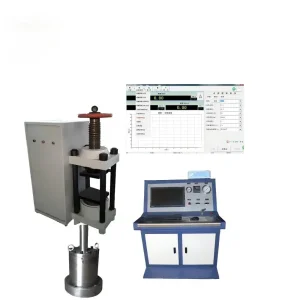
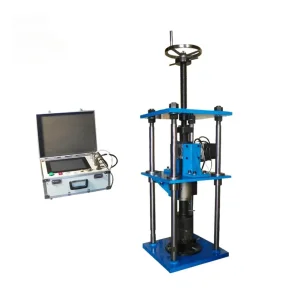
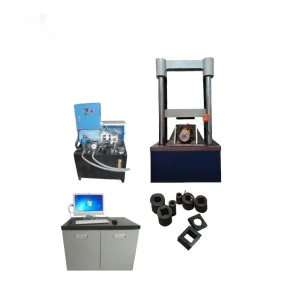
The rock point load test is to place the specimen between two spherical end (conical) loading devices, and apply concentrated load to the specimen by manual oil pump pressure until the specimen is destroyed. Based on this, the rock point load strength index and anisotropy index are obtained. Suitable for various types of rocks (except for extremely soft rocks), it can provide data basis for rock grading, LCD real-time display, computer storage, and curve compressive strength drawing. It is used for indoor and on-site testing and is easy to carry.
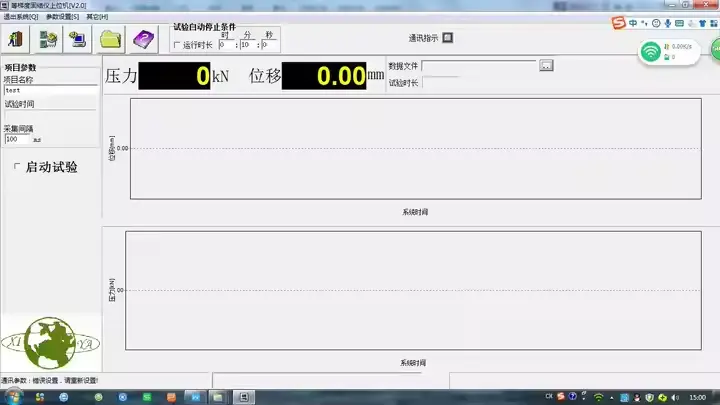
Testing Software and Interface

Technical Parameters

  • 1. Loading method: manual hydraulic pump. Maximum load: 100kN ± 10N
  • 2. Spherical conical pressure plate: curvature radius: 5mm; apex angle: 60°
  • 3. Deformation sensor (optional): Real time display and recording, range 0~10mm ± 0.01mm
  • 4. Point load intensity: Real time display and recording, drawing curves
  • 5. Safety: Equipped with protective net
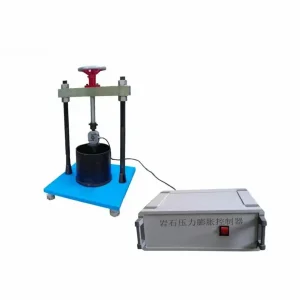
  • 6. Host Structure: Two column or four column (Computer: Optional)

Frequently Asked Questions

Q1: What are the primary applications of the Rock Point Load Tester?
It is primarily used for indirectly determining the uniaxial compressive strength (UCS) and tensile strength of rocks, as well as for rock mass quality grading in geological exploration.
Q2: Can this equipment be used for on-site field testing?
Yes, the device is designed to be portable and easy to carry, making it suitable for both laboratory and rapid on-site field testing.
Q3: What types of rock samples can be tested?
It is suitable for various types of rocks, including irregular rock blocks, except for extremely soft rocks. No complex sample preparation is required.
Q4: How is the Uniaxial Compressive Strength (UCS) calculated?
The UCS is converted from the point load strength index (I₂) using an empirical formula: UCS = k · I₂, where k is a conversion coefficient typically ranging from 14 to 24.
Q5: Does the tester support digital data recording?
Yes, the system features an LCD for real-time display and supports computer storage for data and curve compressive strength drawing.
Q6: What are the key technical specifications of the loading mechanism?
The device uses a manual hydraulic pump with a maximum load of 100kN and features spherical conical pressure plates with a 5mm radius and 60° apex angle.

Related Products